





Le Bandit

Le Bandit Slot Review for Players from Poland

Get to know the slot machine available in Poland, set your limits, and check its features before starting a session on your phone or computer.

Le Bandit demo
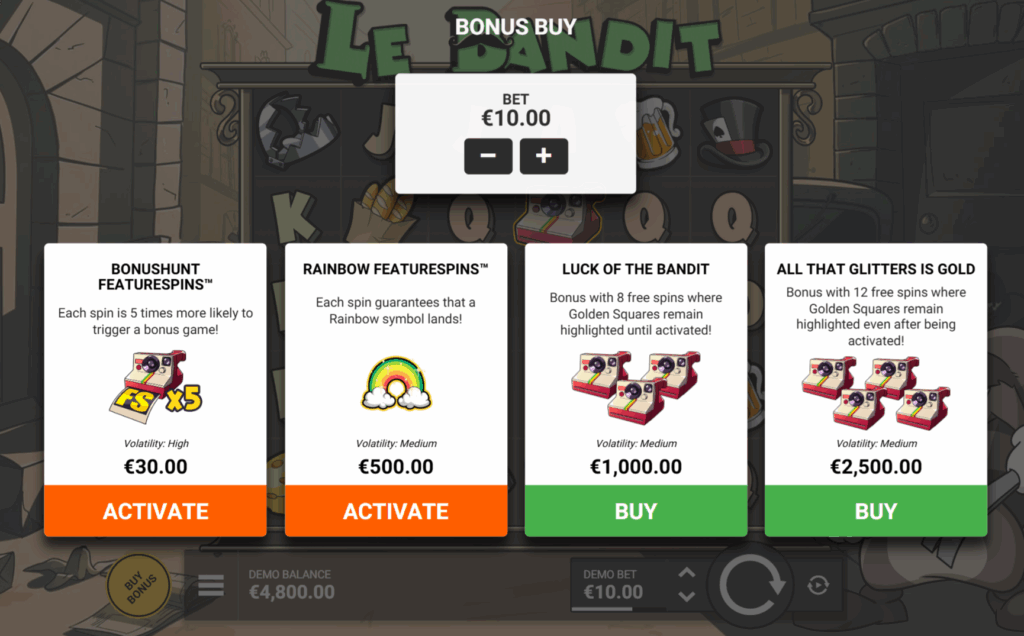
reviews image 1
Le Bandit

How to Read Le Bandit RTP Before a Session

Imagine you’re in the mood for a quick game after work, but you don’t want to dive in blindly. You open the slot’s description and see technical terms and parameters, yet all you really want to know is: will this be a calm or a dynamic session? This is precisely where the ability to read the return and variance indicators—without delving into theory—comes in handy.

The most straightforward interpretation is practical: the return indicator tells you how the game is designed over the long term, while the variance hints at whether you’ll win smaller payouts more frequently, or larger ones less often. This is not a promise of a specific outcome in your session, but rather the game’s “character.” If you play in short bursts, you’ll generally prefer machines that do not require long waits for meaningful action. If you engage in longer sessions while keeping your budget in check, you may afford greater volatility—but then setting limits and taking breaks becomes essential.

In 2026, many people play on mobile, adding speed as another factor. Rapid spins and auto-play can reduce decision time to just a few seconds. Thus, reading the parameters only makes sense if you translate them into concrete action: set your budget, choose your stake, plan your number of spins, and walk away before saying “just one more.”

Le Bandit

Top casinos for playing Le Bandit — current list

ALF Casino

ALF Casino

Mafia Casino

Mafia Casino

SG Casino

SG Casino

Retro Bet

Retro Bet

leovegas

LeoVegas

Le Bandit

What Makes Le Bandit Stand Out in 2026

If you primarily play on your phone, you know this routine: you wait briefly in the queue, launch the game, spin a few times, then go back to your day. Imagine if the interface were unreadable or settings were hidden—then even an entertaining slot machine starts to feel burdensome. Le Bandit protects against this by ensuring quick gameplay entry while simultaneously offering sufficient tools, so you aren’t left to chance.

In practice, three things matter most: readability of stake values, ease of adjusting tempo, and quick access to game progress information. Players often overlook these details until they encounter a day when they’re tired and every extra click becomes frustrating. Here, a simple routine works better: set your stake once, choose your tempo, check limits, and only then begin—no jumping through menus, no anxiously changing options after every losing streak.

It’s also important to keep context in mind: platforms operating in Poland are intended for adults and should offer responsible gaming tools. This isn’t about moralizing; it’s about comfort—the easier it is to set limits, the fewer decisions you make while emotionally charged.

Le Bandit

Game Settings on Mobile and PC

Imagine you begin calmly, but after a while, you realize you’re playing faster than you intended. This is normal—slots are designed so tempo feels pleasant and smooth. Therefore, before your first spin, set two things: stake and rhythm. The rest—bonuses, animations, sound—are added features meant to entertain, but shouldn’t dictate your decisions.

On a computer, it’s easier to maintain control, thanks to a larger screen and fewer accidental clicks. On a phone, convenience wins, but the risk of distractions rises: notifications, calls, quick “just a moment” sessions. Rather than fighting these, it’s better to establish a simple rule: play in short bursts, take a break, then start the next burst.

How to Set Stake and Tempo

Imagine you plan to spend a specific amount for the evening, but don’t divide it among spins. Then, a single stake change can disrupt your entire plan, as the balance depletes faster than you notice. The best trick is simple: divide your session budget by the number of spins you realistically intend to make (not “ideally”), and only then set your stake.

Start at a level where a series of losing rounds doesn’t force you into anxious adjustments. If you immediately feel the urge “I’ll increase it—nothing’s happening,” that’s a sign tempo is too fast or stake too high for your comfort level. Often, players try to fix emotions with money—better to fix settings: slow down, take a break, return after a moment.

When to Use Auto Spin

Usually, it goes like this: you enable auto spins “for a moment,” answer a message, and suddenly minutes pass, and you can’t recall what actually happened. Imagine afterward wanting to “make up for it,” because it feels like the game slipped from your grasp. That’s precisely why auto spins should be treated as a tool, not a default mode.

If you do enable them, set a short sequence and add your own control: after the sequence ends, stop, check your balance, and ask yourself a quick control question—“Am I still playing for fun, or have I gone on autopilot?” In many cases, manual play works better, as it enforces micro-pauses and gives time for decision-making, especially on mobile.

Demo Mode and Learning Without Pressure

Imagine you want to understand the game but don’t feel like paying for learning mistakes. The test mode is ideal then: set tempo, check buttons, see how features work, and decide whether you even like the gameplay rhythm. It’s also a good moment to test yourself—do you start clicking faster after a few losing rounds, or do you stick to your plan?

The best approach is to treat the test as training: set a time limit, play a short spin sequence, take a break, then play another sequence. If you already feel tension in the test mode, in a real session it will only intensify. This isn’t a sign that “something’s wrong” with you—it’s information that you need a calmer tempo and stricter limits.

Special Features and Risk Management

Imagine hitting an exciting moment in the game and immediately wanting to “go all-in,” because you sense it could be that moment. In such situations, it’s easiest to exceed your plan, as emotion suggests it’s worth the risk. Instead, treat special features as a means of variety, not a shortcut to results.

The practical approach is simple: don’t change multiple things at once. If you want to speed up tempo, don’t simultaneously increase stake. If you want to raise the stake, slow the tempo and play manually. This might sound modest, but it works, as it reduces chaos—and chaos is the greatest enemy of a responsible session.

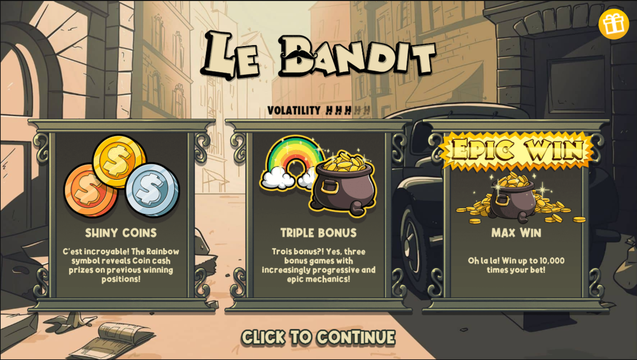
reviews image 2
Le Bandit

Deposits and Withdrawals in Poland Without Stress

Imagine you have a plan: short session, one deposit, and done. Then the thought appears—“I’ll add a bit, since it’s going well today.” This is the moment when budget control stops being theoretical. In Poland, payment method options depend on the operator, but money management principles remain the same: plan before the session, execute during, evaluate after completion.

Transparency helps the most: the ability to check transaction history, payout status, and limit settings without browsing through menus. Good platforms for adult users also provide break and self-exclusion tools, knowing mobile gaming can subtly “sneak in” over time.

Topic

What to Check Before the Session

Why Do This

Simple Habit

Deposit

Available methods and confirmations

Avoid stress and mistakes

One deposit per session

Withdrawal

Full profile data

Fewer extra steps

Complete your profile in advance

Limits

Budget, time, loss threshold

Protecting your plan from impulse

Set limits before playing

History

Preview transactions and sessions

You see behavioral patterns

Check after each session

Support

Contact channel and required data

Faster resolution of your issue

Write specifically, without emotions

One-Click Deposit, But With a Plan

Imagine depositing funds in a hurry because “you only have a moment.” Later, you realize the amount exceeded your plan, and you’re already deep into the game—hard to stop. Best practice is simple: set your session amount beforehand and treat it like a boundary, not a suggestion.

If you tend to add more, adopt a shield rule: after depositing, temporarily block payments (even mentally) for the session and focus instead on time limits. Often, it’s precisely that second deposit that makes the difference between a relaxed pastime and a nervous attempt to “recover.”

Withdrawal and Verification, Step by Step

Imagine you initiate a withdrawal and soon start refreshing the status, eager for it to be done. Stress builds, and instead of relaxing post-session, you unnecessarily stir yourself up. Withdrawals usually depend on method and security procedures, so first, calmly check your account dashboard and verify that your profile data is complete.

Good practice: complete formalities “cold,” not right after an emotionally intense session. Fill in your details ahead of time, and on the withdrawal day, simply proceed through the process calmly. If additional confirmation is required, don’t view it as an obstacle—it’s a standard security measure in financial services.

How to Contact Support to Get Help Quickly

Imagine something is unclear and you instinctively send five messages in a row. Then the response comes later because the support agent has to untangle what exactly you mean. The most effective message is short and specific: what happened, when, what status you see, and what you expect.

Instead of “it’s not working,” write: “I initiated a withdrawal; the status shows ‘in progress.’ Please let me know if additional confirmation is needed.” This speeds up the conversation and prevents emotional escalation. Also, if you sense rising tension, take a break from playing. Entertainment should be calm and for adults—there’s no sense adding stress.

Le Bandit

Session Tactics and Responsible Play

Imagine starting “just for a moment,” only to realize half an hour has passed and you’re unsure when. This doesn’t have to be a problem if you have a plan. Issues arise when you lack a plan and make decisions on the fly. In 2026, with instant mobile access, responsible play is primarily about routine: limits, breaks, calm pace, and a clear endpoint.

The biggest mistake is chasing results. Players often think they must “make up” for losses, or their session feels wasted. In reality, the session’s purpose is entertainment—not settling scores with a machine. If you keep just one simple rule in mind—“I stop as planned”—you stay one step ahead of impulse.

Time and Budget Limits Before Starting

Imagine playing in the evening, tired, and easily clicking “just one more time.” Limits solve this by removing part of the decision-making at the moment when emotions run strongest. Set your session time and budget before opening the game, then simply follow your plan.

A block rhythm works well: 10–20 spins, short pause, quick review—do you keep your stake? Has your pace accelerated? Do you still feel calm? These small breaks prevent major mistakes.

Loss Plan and Profit Goal Without Chasing

Imagine you’re slightly in the red and start strategizing: adjusting stake, speeding up tempo, extending the session. This is the classic “chasing” moment, which ruins fun. A loss plan is simple: set a threshold at which you stop, no negotiations. It’s your boundary—not an outcome.

A profit goal can also help, but only if realistic. Setting it too high prompts risk-taking to “finish strong.” It’s better to set modest goals and view leaving the game as a normal session end—not a failure.

Breaks, Focus, and Small-Screen Play

Imagine playing on your phone, with notifications and calls popping up in the background. It’s easy to click accidentally or act impulsively. Before starting, activate focus mode, mute notifications, and set comfortable brightness. This isn’t cosmetic—it’s essential to staying present in your decisions.

During the session, ask yourself a simple check-in question: “Am I still playing for fun?” If your answer is “I’m recovering,” it’s time for a break. Sometimes five minutes and a glass of water are enough for emotions to settle and reason to return.

Timeout and Self-Exclusion as Safeguards

Imagine having a bad day and knowing you’re more impulsive. The best strategy isn’t “being strong,” but using tools: a temporary break or lockout. Timeout acts like a pause—you cut off access for a set period, so you don’t have to battle temptation in the same moment.

Self-exclusion is an option for those who notice their boundaries regularly blurring. Treat it as a protective tool, not a drama. If you spot a recurring chasing pattern, set stricter limits and take a longer break. This is a sign of control, not weakness.
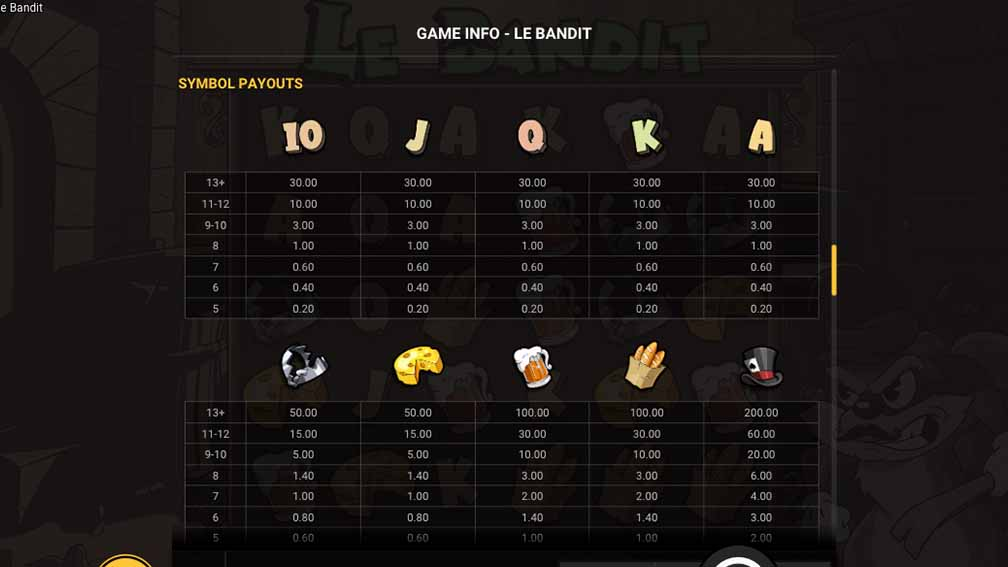
reviews image 3

Comparing Reviews and Self-Assessing the Game

Imagine searching for a slot name and seeing dozens of reviews that all sound identical. In 2026, there’s plenty of content, but specifics are rare—so you must read wisely. Instead of seeking one “final” review, compare several and focus on practice: how reviewers describe speed, settings, mobile comfort, and limit tools.

Also separate game assessment from platform assessment. A slot might suit you, but the operator may differ in payment handling and support style. Best approach: test consciously—a short session, fixed stake, scheduled breaks—then quickly review afterward: what suited you, what frustrated you, where you lost control of pace.

What to Look For in Reviews

Imagine reading a review full of superlatives, yet lacking specifics. Such text tells you nothing, as it doesn’t answer how *you* will play. Seek information about ergonomics: are settings simple? Is stake and balance clearly visible? How does the game perform on mobile? Can you slow the pace easily and pause comfortably?

A good review teaches the process, not just stirs emotion. It should explain what the player does: how they set their budget, plan sessions, and react to weaker rounds. If you see only generic phrases, treat it as a warning sign and base your decision on a self-administered test in controlled conditions.

FAQ

How to set a safe session budget?

Imagine playing after work, wanting to “unwind”—this is when exceeding your plan is easiest. Decide on a single-session amount before starting the game, divide it into a realistic number of spins, and stick to a fixed stake instead of chasing bets. A one-deposit-per-session rule and a time limit that ends play once impulsive clicking starts both work well. After each session, briefly review your history to assess whether your plan was realistic.

What to do when playing too fast on a phone?

Imagine that notifications are blocking your screen, and you click reflexively. Turn on Focus Mode, mute notifications, and play in short blocks, taking a break every dozen spins or so. If you feel rushed, return to manual spins and slow down the pace, as this restores control. The most important thing is that the break is real, not just a 'second' between clicks.

How do you recognize that you're starting to chase losses?

Imagine that after a few weaker rounds, you want to immediately ‘bounce back’ and change several settings at once. This is the first sign of chasing, as decisions stem from emotions, not from a plan. A simple rule helps: if the thought 'just one more' appears, finish the block and take a break. Only return when you can make a calm decision, without the need for immediate revenge.

Is it worth using automatic spins?

Imagine that you activate a series of spins while simultaneously replying to messages—after a while, you don’t remember what happened in the game. Automatic spins can be convenient, but they are best used for short series and only while fully attentive to the screen. After each series, pause, check your balance, and ask yourself a quick control question: am I still playing consciously? If the answer is ‘on autopilot’, return to manual play or take a break.

How should you approach withdrawals to avoid stress?

Imagine that you submit a withdrawal request and constantly refresh the status because you want everything immediately. Instead of escalating tension, check the status in your dashboard and ensure your profile details are complete, as this is the most common reason for additional steps. Processing time depends on the method and security procedures, so it’s better to give yourself space and handle it calmly. If you need support, write specifically: what you submitted, when, and what status you see.

When is the best time to take a break from playing?

Imagine that you’re tired and catch yourself clicking faster than you think. This is the perfect moment for a break, as decisions start becoming automatic. Pause after a spin block, step away from the screen, and only return when you feel calm. If this situation repeats regularly, set stricter time limits or use a temporary self-exclusion to ensure your break is genuine.

How to read reviews so as not to fall for marketing?

Imagine that you’re reading a text full of superlatives, but lacking any concrete steps. Such a review won’t help you practically, because it doesn’t describe how the game plays on a phone, how to set the pace, or how to maintain control over your budget. Look for reviews that describe the process: limits, breaks, session rhythm, interface comfort, and player behavior during tough moments. In the end, the best insights will still come from your own test in a short, controlled session.

Play Now
🇬🇧 English