
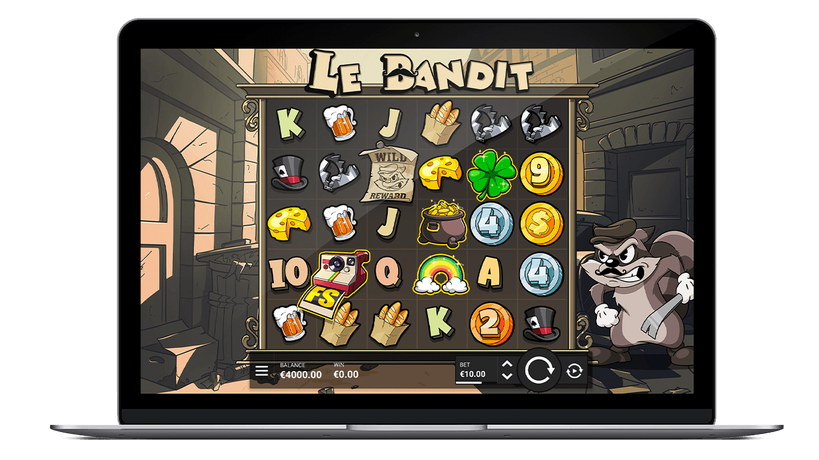





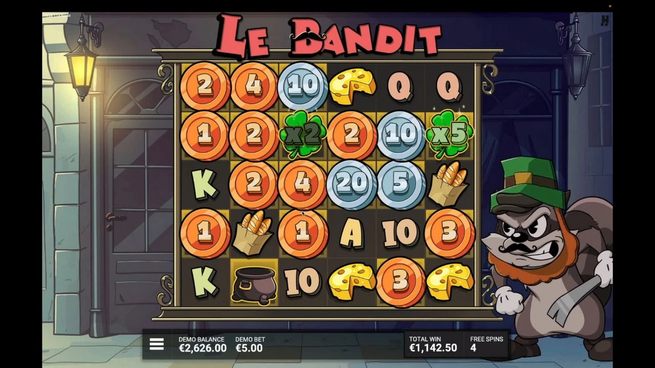
Le Bandit Slot Demo in Poland
Try the Le Bandit slot in demo mode, set your limits and speed, then play mindfully and calmly in Poland.
What the Le Bandit Demo Offers in 2026
Imagine you only have a moment—a break between obligations or an evening when you don’t want to think about anything heavy. You start the game, spin a few times, and within a minute you already feel whether this is your tempo. This is exactly what the trial mode is for: not to “find a result,” but to check how the slot behaves and how you respond to its rhythm.
In 2026, most people play on mobile in short sessions, so it’s valuable to test in practice. First, open the rules panel and see which symbols are key, how special features work, and when the bonus round is triggered. Then set your bet at a level that lets you think, not react impulsively. Do a series of spins without changing settings—only after a while will you start to see whether the game is more “spiky” or rather delivers small, steady hits.
A good trial has a simple goal: understand the mechanics and your own habits. If, after a few empty spins, you automatically speed up or feel inclined to raise the bet “so something happens,” that’s a signal you need a time limit and a break. Platforms available in Poland usually offer control tools (limits, breaks, temporary blocks, self-exclusion)—treat them as part of your settings, not as an emergency backup.
How to Read the Le Bandit Demo Slot Without Rushing
If you play without a plan, even the best explanations disappear from memory after five minutes. Imagine someone asks you after a session: “Exactly what triggers the special feature?”—and you only remember the animations. To avoid this, treat the game like an instruction manual, not like a fireworks show.
Start with three things: what a standard hit pays, what the special symbols do, and how to enter the bonus round. You don’t need to memorize names—what matters is understanding step by step what happens. In practice, the block method works well: 20–30 spins at one bet, pause, briefly revisit the rules, then another block. This way, you’ll notice patterns instead of chasing random moments.
Pay attention to tempo: does the game encourage rapid clicking, or invite you to slow down and observe the board? When you sense you’re falling into autopilot, take a simple “stop-frame”: one deep breath, a pause, then only the next spin. Sounds trivial, but in a real session it can help maintain control, especially after a tough day.
How to Organize Daily Le Bandit Demo Play
Imagine you want to try the game in the morning with coffee but don’t want it to “hook” you for half an hour. Set a time limit in advance and treat it like a deadline: stop when the time is up, even if the game is getting exciting. This habit is especially important when playing on platforms available in Poland, if you want to keep entertainment within healthy boundaries for adults.
First, set the spin speed and locate the pause button, session history, and rules info. Then choose one starting bet and stick to it for the entire trial—don’t change it every few spins, or you won’t know whether you’re assessing the mechanics or your own emotions. Finally, do a brief recap: what was clear, what slipped your attention, and what tempted you to rush.
How to Set Up a Start That Isn’t Blind
Most players do the opposite: they click first, then look for the “rules” button. Imagine that halfway through a session something unusual happens, and you don’t know whether it’s significant or just visual flair. Better to prepare in advance: check the info panel, set volume, enable or disable auto-spin acceleration, and only then start.
Also define your own “check-in point”—a moment to pause and assess the situation. It could be after a set number of spins or after the first major event. This way, you won’t ride emotions but will run the session like a simple test: observe, note, finish.
How to Check Features Without Chasing Results
Imagine that after a long losing streak, you get the reflex: “just a few more—it *has* to turn around now.” That’s common. In the demo, use this differently: don’t force the spins—instead, observe what in the game signals a change in dynamics: appearance of special symbols, more frequent small wins, a different board layout.
If you want to see the bonus round, treat it as a mechanics demonstration, not as an end in itself. After it ends, take a break and return to regular spins to compare experiences. Then the test makes sense: you understand the flow, know what suits you, and don’t build expectations on random emotions.
10-Minute Test Plan Without Chaos
Set a timer for 10 minutes. Imagine this is training, not a marathon: 3 minutes of calm spins, 4 minutes observing symbols and messages, 3 minutes checking settings and returning to rules. You stop at the moment you planned—not when “something else happens.”
After finishing, add one sentence: what was clear, and what needs review. This micro-habit makes the next session shorter and calmer, because you don’t start from zero.
Notes That Make the Next Session Easier
Imagine returning after a week—you remember the atmosphere, but not the settings. Write down three things: the stake at which you felt control, a comfortable spinning speed, and moments when you felt like speeding up. This isn’t “serious analysis,” just a simple way to make entertainment more mindful.
If playing on a phone, add one more note: whether the interface caused visual fatigue. In 2026 this is minor, yet it can decide whether you feel calm or nervous after 15 minutes.
Registration and Budgeting on a Platform in Poland
Imagine after a few tries you know the game suits you and you want to move to real-money play. The worst moment for decisions is when you’re excited—you may rush through everything at once: account creation, deposit, session with no limits. Better to approach this like configuring: first registration, then safeguards, then limits, and only at the end top up the account.
The platform available in Poland should be used only by adults and within established rules. This need not sound stern—it’s simply a practice protecting your decisions. Set a budget per session and treat it like an entertainment expense, not a project to “catch up” on.
Control Element | What to Set Before Playing | Why You Do It | Where to Find It in the Panel |
Time Limit | Maximum duration of one session | To avoid autopilot | Responsible Gaming / Limits |
Deposit Limit | Daily or weekly amount | To prevent overshooting your budget due to emotion | Account / Finance / Limits |
Breaks | Timer reminder or time lockout | To return to the game calmly | Session Settings |
Transaction History | Quick access to statuses | To avoid guessing what’s happening | Wallet / Transactions |
Help Channel | One chosen contact method | To resolve issues faster | Help / Support |
How to Set Up Your Account and Safeguards Without Stress
Imagine logging in on a new device—and suddenly a problem arises: forgotten password, missing confirmation, data chaos. This is common, as everyone wants to “jump straight into the game.” Do the opposite: after registration, set a strong password, enable additional verification if available, and organize your profile data for consistency.
Then go to responsible gaming settings and set limits—not in fantasy, but realistically: the time you actually have and a budget that doesn’t impact daily expenses. This way the session won’t overflow your plan, and you won’t have to battle yourself in the middle of the night.
Deposits and Choosing a Payment Method Without Surprises
Imagine you want to play briefly, yet your payment method suddenly requires extra authorization and disrupts your rhythm. Therefore, before your first deposit, check your bank or provider’s limits, ensure data consistency, and confirm that online transactions are active. Also helpful: separating your entertainment budget from main funds—this makes enforcing limits easier.
Remember that processing times depend on the method and provider. Instead of expecting “one standard,” adopt a simple rule: set your budget so you’re not pressured by time. When things unfold calmly, decisions improve.
Limits, Breaks, Timeout, and Self-Exclusion
Imagine a tough day: little sleep, high stress—and suddenly the game becomes a way to release tension. In this state, exceeding your plan is easy. Limits and breaks exist precisely so you don’t have to fight your emotions *during* a session—you win earlier, by setting rules beforehand.
Time-based lockout (timeout) helps when you feel like taking a break from gaming for a few days. Self-exclusion is a stronger option—worth knowing where it is before it becomes necessary. Most importantly: settings are not punishment, but tools enabling conscious, pressure-free play.
Withdrawals, Support, and Common Issues in 2026
Imagine ending a session and wanting to withdraw funds, yet the system asks for an extra step or keeps status “in progress” longer than expected. Your first instinct may be anxiety, the second—contacting support without details. Better to approach this as a procedure: verify data, choose method, confirm the request, and monitor the status in transaction history.
In 2026, most issues don’t stem from “game errors,” but from minor oversights: inconsistent data, changing methods mid-process, missing verification, or rushing. With order in place, the process becomes less stressful, and support contact shorter and more precise.
How to Initiate a Withdrawal Without Rushing
Imagine clicking “withdraw” and immediately returning to your affairs. Yet it’s worth spending a minute verifying data: is your profile complete, is the method the same one you use most often, and are there any pending requests still unfinished? One request at a time really simplifies life.
If this is your first withdrawal, some players perform a small test to see the process step by step. This brings peace of mind, as it prevents unexpected additional confirmations or messages you might not understand later.
What to Do If the Processing Is Delayed
Imagine a weekend or a period when banks operate more slowly—in such cases, even a correct transaction can take longer. Instead of refreshing your balance every minute, check the order status and any requests for additional information. If something requires action, you’ll usually see it directly in your dashboard.
When the status appears stuck, prepare a concise support ticket: date, payment method, last message received, and what you’ve already done (e.g., re-login). Stick to facts—no emotions, no tangents. This style of ticket speeds up resolution.
How to Contact Support to Get Help Quickly
Imagine a support agent who can’t see your screen and only has your statement: “it’s not working.” They’ll then need to ask questions, and you’ll wait. Better to provide all necessary details at once: device, type of issue, date, transaction history status, and last message received.
Stick to one contact channel and one support thread. If you split your issue across multiple messages in different places, you prolong your own response time. Keep it brief, specific, and calm—this isn’t about politeness, but effectiveness.
Account and Device Security
Imagine logging in from a public network and suddenly getting disconnected—security systems may respond cautiously. Keep your OS and browser updated, avoid suspicious add-ons, and log out after each session. If playing on a mobile device, enable screen lock and never share verification codes.
Regularly review activity history (if available) and act immediately on unusual events. Changing your password and contacting support are simple steps that often resolve issues before they escalate into stressful situations.
Most Common Mistakes and a Simple Plan for Your First Session
Imagine starting a game “just for a moment,” only to realize an hour has passed and you don’t even remember when you increased your bet. This is the most common mistake: lack of a plan. The second is playing without breaks; the third, trying to “reclaim” losses after a bad session fragment. It seems obvious, yet it repeats constantly because emotions take over.
A simple plan works better than the best intentions. Set a time limit, set a deposit limit, choose one starting bet, schedule a break at a fixed point, and end your session as planned. If you sense urgency, apply a “pause-and-calm” technique: put your phone down, stand up, and return after one minute. In 2026, when everything is fast and mobile, such a pause is a real tool for control.
Checklist Before Playing with Real Money
Imagine a pre-travel checklist—you won’t forget your passport. Before your session, set your time and budget limits, locate the transaction history, and ensure your profile data is complete. Choose one starting bet and decide after how many spins you’ll take a break.
Decide in advance when you’ll stop, regardless of the outcome. If the urge arises to play “just a little more,” take a break and return only when your mind is calm. This simple ritual keeps entertainment as entertainment, not as an impulsive chase.
FAQ
How to Set a Time Limit Before a Session?
Best done before you start spinning, while you’re still calm—not in the throes of emotion. Imagine playing in the evening, when time seems to fly by faster than you think—the limit acts as a reminder that this is only entertainment. Set a realistic time frame (one that suits your day), add a mid-session break, and stick to your plan even if things get exciting.
Are Breaks Worth Taking if I Play Briefly?
Yes—because a break acts as an attention reset. Imagine a streak of empty spins triggering an automatic urge to speed up—the very moment a one-minute break helps return you to calm decisions. In practice, set a simple rule: after a set number of spins, stand up, put the phone away, and return only after one deep breath.
How to Choose a Budget So You Don’t Regret It After the Session?
Set an amount whose loss wouldn’t affect your daily expenses, and treat it as an entertainment cost—not an investment. Imagine a cinema ticket: you pay once and don’t try to “get your money back” after the movie. A pre-set deposit limit also helps, as you won’t cross your own boundary even when emotionally charged.
What to Do If Asked to Confirm Your Data?
Most importantly, avoid doing this in haste. Imagine missing one clear photo of your document, causing delays—unnecessary stress rises. Prepare your files calmly, verify data consistency in your profile, and respond to support queries briefly, precisely, and without digressions.
How to React If a Withdrawal Takes Longer Than Expected?
Start by checking the status in your transaction history and ensuring there are no additional steps you must take. Imagine weekends or bank-side delays—these do happen, so don’t assume a problem right away. If the status remains unchanged for an extended period, submit one support ticket with the date, payment method, and last message; this helps support quickly understand the context.
How to Write to Support So You Don’t Exchange Ten Messages?
Provide a full set of information in one message: device, date, type of issue, current status, and what you’ve already verified. Imagine a support agent who can’t see your screen—they need facts, not emotions. Stick to one thread and one channel, as splitting tickets usually prolongs resolution.
How to Recognize That I Should End My Session?
If you catch yourself raising your bet without a plan, speeding up spins, or feeling irritation, it’s a signal. Imagine someone observing your decisions from the side—are they calm and thoughtful? End your session as per your pre-set schedule, and if this repeats, use a temporary break or stronger self-control tools.