
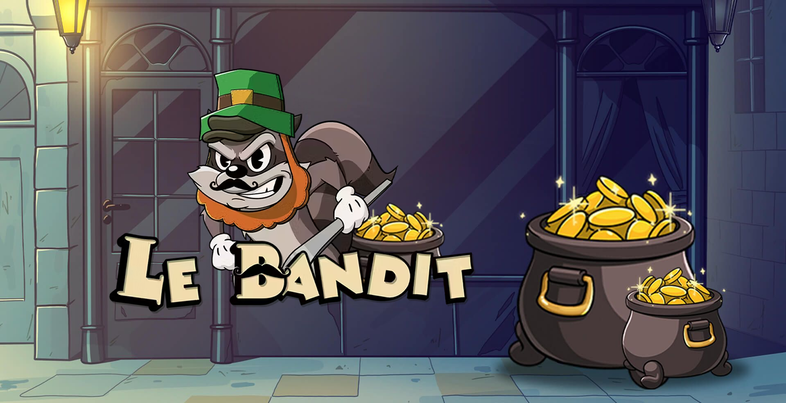






Le Bandit Slot in Poland
Set bet, limits, and breaks to ensure a calm and clear session in Poland—from the first spin to payout.
Getting Started at Le Bandit Casino in Poland
Imagine you have a fifteen-minute break, start the game 'just for a moment', and only afterward realize you haven’t even checked the basics: bet amount, time limit, round history. This isn’t inexperience—it’s starting without a plan. It’s better to take a short warm-up configuring settings so you don’t make decisions under emotional influence later.
At the beginning, treat the platform like a control panel, not just background noise. First, log in and quickly verify your profile; then, use session control tools (limits, reminders, timeouts); only after that, start playing. In 2026, most problems stem from rushing: players see dynamic animations, click faster, and the budget slips away before they can assess the pace. Pause and answer this simple question: How much do I want to spend at most in this session, and when will I stop?
An important point many prefer not to think about: this kind of entertainment is intended for adults—only those aged 18 and over. This isn’t a 'minor note'—it’s a real boundary affecting verification and process security. Additionally, the platform is available to players in Poland and operates within applicable rules and user protection standards, so adhering to a simple rhythm is advisable: settings, test, then longer sessions.
Begin with a short trial series. Select the lowest comfortable bet, set a slower pace, play a few rounds, and then check the betting history. Why? To see whether you understand what was calculated as the result versus what was purely visual. This habit acts as a brake—you don’t merely 'feel' something happening; you see it clearly and unambiguously recorded.
What to Set Before a Session in Le Bandit Slots
If you start playing in the evening, it’s easy to tell yourself: “I’ll set it later, I just want to try now.” Imagine that “later” means “after twenty minutes,” when you’re already emotionally invested and everything feels urgent. At that point, limits stop being a plan and become a negotiation with yourself. It’s best to set them before the first round begins.
Start with three things: a time limit, a deposit limit, and a reminder to take a break. This is the minimum that actually works. A time limit prevents sessions from dragging on, a deposit limit curbs impulses like “I’ll just add a little more,” and the break reminder pulls you out of automatic play. It’s also worthwhile to set how you want to play: manually or automatically. If you choose automated rounds, add a limit on the number of spins, otherwise the pace slips unnoticed in the background.
Next—settings for pace and readability. Slower animations aren’t “boring,” but practical: you more easily see what happened and are less likely to react impulsively. Add a simple trick: change only one setting at a time. Change either your stake or your pace—never both simultaneously. This way, after a few minutes, you’ll know what actually influenced the session’s flow (and what was just an impression).
Finally comes the most important: the exit plan. Determine in advance the moment you’ll stop—either a specific time or the session’s cost—and treat this as a rule of play. This works especially well when playing “for relaxation,” because relaxation ends once you start chasing results.
Le Bandit Play: Pace, Stake, and Round Plan
Imagine that after a few empty rounds, you think: “I’ll raise my stake to speed things up.” It sounds logical, but often ends with the cost per minute rising while you have less time to make calm decisions. The round plan should be simple: you control the pace, you don’t try to force outcomes.
Start by establishing the session’s rhythm. A practical example used by many players: a short test series, followed by a main series, then a break and a decision on whether to continue. During the test series, you check your settings and mechanics; in the main series, you stick to one stake level; during the break, you assess whether you’re playing for fun or because “you need to make up for losses.” The latter is a warning sign.
In 2026, the player’s biggest advantage isn’t “feeling,” but consistency. If your stake increases, let it increase only when you have a reason documented in your plan (and only by one level). If the pace accelerates, make it a conscious decision—not a result of boredom. Sounds dry? Yet it’s precisely this dryness that protects both your budget and your mental well-being.
Plan for the First Twenty Minutes—Without Pressure
Imagine you have exactly twenty minutes and want to exit the session without feeling like “time slipped away.” Set a timer, choose a relaxed pace, and divide this time into two parts. In the first ten minutes, do test rounds and review history; in the next ten, play in a steady rhythm without changing stakes.
In practice, it looks like this: start at a level where you can comfortably complete many rounds without tension, then after a series, take a short pause. In this pause, check your balance and bet history. If you notice you raised stakes without a plan, drop down one level or end the session. It’s simple, yet effective, because decisions are made during breaks—not in the heat of emotion.
How to Read Results and Bet History
Imagine you see a strong visual effect and feel “that was close.” Yet feelings aren’t data. The data is in your history—there you can see what stake was placed, what the outcome was, and whether something actually changed the round’s course.
The best approach is to adopt one habit: after each short series (e.g., about a dozen spins), open the history and check three things: whether stakes remained stable, whether the pace didn’t suddenly spike, and whether results were a series of small wins or one big event. This way, you stop “chasing impressions” and start evaluating sessions based on facts. And if something surprises you, return to the rules description in the menu rather than fabricating your own theory.
Quick Pre-Start Settings Checklist
Imagine you want to check everything in five minutes before playing seriously. This is doable if you use a checklist, not improvisation. Work through four steps: limits, pace, stake, history.
Set your time limit and break reminder, choose slower animations, set the stake at a test level, and run a short series. Then open history and confirm that stakes and results are clearly recorded. If this works and is readable, only then enter a longer session. If not, adjust settings—calmly, because you’re not yet “in the game.”
How to Stop the “Just One More Round” Spiral
Imagine telling yourself “just three more spins,” and exactly on the third spin, a stimulus appears that makes you stay longer. This is normal, as it reflects how reward psychology and break patterns work. That’s why you need a firm stop condition that isn’t dependent on mood.
Set the exit condition in advance: either a time limit or a maximum session cost. Once it’s reached, stop—even if “it’s getting interesting right now.” If you feel frustration, don’t try to solve it by playing more. Take a break, return to your plan, and decide calmly whether this is still entertainment or has turned into pressure.
Le Bandit Online: Account, Security, and Limits
Imagine playing on your phone while commuting—everything works quickly, then suddenly you need to confirm an operation and realize you don’t have email access or remember your login details. Suddenly, a “short session” becomes stressful. That’s why setting up your account and security beforehand—before emotions take over—is vital.
Start by organizing your profile: ensure your email and phone number are current and that you have a strong password. If available, enable additional login verification—especially on mobile devices. In 2026, this is standard protection, not “optional fluff.” Next, move to limits: deposit cap, session timer, break reminders, and optional timeouts. These tools should function automatically, since remembering boundaries during gameplay is difficult.
The platform is available in Poland and operates under established user protection standards. This means some processes may require confirmations or verifications—better to handle them calmly at a distraction-free time. The fewer formalities you leave for “later,” the easier it is to keep sessions within bounds.
Registration and Profile Setup—Without Rushing
Imagine typing your details “quickly” because you want to start playing, only to later find a typo in your email address. Everything works fine until your first important operation, when chaos begins. Two minutes of care at the start saves an hour of stress later.
After registration, verify your contact information is correct and easily updatable. Also review privacy and notification settings—valuable to be alerted about logins and financial operations. If age confirmation (for adults) is required, do it right away, since emotional urgency and haste are poor advisors at payout time.
Session Limits: Time, Deposits, and Reminders
Imagine playing “just for a moment” with no timer or break reminder. Time flies faster than it seems, and you only notice after the fact. Limits exist so that decisions are made in advance—not halfway through a session.
Set your session timer to a realistic value, not an “ideal” one. Also add a deposit limit so you can’t impulsively top up. Treat break reminders as neutral signals: stand up, take a few steps, check your balance and bet history. If everything matches your plan, resume play. If not, end the session or take a longer timeout.
Access Protection on Phone and Shared Computers
Imagine logging in on someone else’s computer “for a moment” and forgetting to log out afterward. This happens more often than people admit. Security isn’t just passwords—it’s habits too.
Don’t save login data on devices you don’t control. Enable extra login verification, and if playing on mobile, ensure screen lock is active and your OS is up to date. If unusual activity appears, act calmly: change your password, review login history, then continue. The less improvisation, the lower the risk.
Deposits and Withdrawals in 2026: A Step-by-Step Process
Imagine making a deposit, watching your balance not refresh immediately, and impulsively trying again. A moment later, you discover the transaction did go through—you now have two deposits instead of one. This isn’t “bad luck,” just a lack of procedure. In finance, procedure beats emotion.
The best approach is dull—but effective: one deposit per session, monitoring the limit, a short game test, then longer play. Treat withdrawals as a process, not a race. If confirmations or extra steps appear, view them as standard security measures—easier to handle when you’re not in a rush.
Deposit: Maintaining Budget Control
Imagine you budget a specific amount for entertainment but make several small deposits because “it’s more convenient.” Later, it’s hard to track what you actually spent, and sessions become less transparent. One deposit and a clear limit work better than ten small decisions.
Before depositing, set your cap and choose a method you know well. After confirming, return to your dashboard and check the transaction history—don’t assume “it’s surely fine.” Only then start test rounds at a relaxed pace. If you know you tend to speed up, play manually and take breaks more often (a simple way to avoid falling into autopilot).
Withdrawal: Status, Confirmations, and Calm
Imagine winning and wanting to withdraw immediately, refreshing the dashboard every fifteen seconds. This only raises tension. A more effective approach: “submit, save details, check status later.”
When withdrawing, first check your profile data and whether any confirmations are missing. Choose a withdrawal method, complete required fields, and confirm. Save the amount and submission time—so you have concrete details if questions arise. If the status doesn’t change, contact support with facts only: date, amount, method, message. No vagueness, no emotion—this usually leads to faster resolutions.
Payment Methods: What to Choose for Convenience
Imagine playing on your phone and wanting full control over confirmations, yet choosing a method you don’t use daily. You then face questions: where to check status, how soon you’ll see history, and whether daily limits apply. Choosing a method makes sense only when it fits your habits.
Below is a practical comparison—not promises, but what actually helps maintain session and budget control.
Payment Method | How You Typically Confirm | Budget Control | What to Watch Out For | Simple Pre-Session Motion |
Payment Card | Bank authentication or code | Medium | Bank limits, impulsive top-ups | Set daily transaction cap |
Instant Transfer | Bank login and confirmation | High | Interrupted confirmation | Enable transaction notifications |
Electronic Wallet | Confirmation in wallet app | High | Too easy 'one-click' action | Keep a separate entertainment budget |
Traditional Transfer | Transfer order | Very high | Longer booking time | Do it in advance, without pressure |
Mobile Methods | Biometrics or code | Medium | Hasty action on the move | Slow down your pace and play manually |
How to Avoid Duplicate Transactions and Errors
Imagine you see a lack of balance refresh and think: 'this didn't work.' You click again, and later you have a budget control issue because the amount exceeds your plan. This is a classic moment where it's valuable to switch from emotions to procedure.
When something doesn't display, first check the transaction history and operation status. Refresh the panel after a moment, and only then proceed with further steps. If an error message appears, note it down (even in memory: what, when, which amount) and only then contact support. One operation at a time—this is the rule that saves your budget and nerves.

Support and Technical Settings for Daily Use
Imagine you're playing on the go, your connection briefly weakens, and you click again because it seems nothing happened. This is how misunderstandings arise: duplicate actions, incorrect impressions, unnecessary tension. Technical comfort is part of session control, not an afterthought.
Focus on the basics: stable connection, charged device, disabled aggressive power-saving mode during sessions. It’s also helpful to have at hand the panels you return to most frequently: limits, transaction history, bet history, and break settings. When you know where they are, you’re less likely to act impulsively.
If something goes wrong, don't try to 'fix' it with additional clicks. Stop, check the status, and only then take action. This sequence is dull, but precisely because of that, it works.
How to Contact Support to Resolve Issues Quickly
Imagine you send a message saying 'payout isn't working' and wait, only to receive a series of follow-up questions requesting details. This is normal, because without specifics, nobody knows what to investigate. The more precise your description, the shorter the path to resolution.
It's best to follow a simple template: what you attempted, when, with which method, the amount, and exactly what appeared on the screen. One issue per ticket—don’t mix several problems at once. If the matter concerns limits or blocks, explicitly ask when the change starts taking effect and whether it can be reversed. And when you feel emotions rising, take a break before writing—calm tone and concrete data work better than pressure.
FAQ
How to Set a Time Limit Before a Session?
Set the timer even before performing your first round, as your decision will then be calm. Imagine playing in the evening and easily extending play with 'just five more minutes'—the timer interrupts this automation. In practice, choose a realistic timeframe (one you truly accept), add a break reminder, and only then start, adhering to the rule: a break is a moment to decide, not to act on another impulse.
Is it worthwhile to begin at a slower payout pace?
Yes, especially if you want to control your budget and avoid reacting emotionally. Imagine fast animations making it difficult to recall the last few rounds—that’s a sign the pace has taken over. Slower pacing gives you time to notice stake changes, evaluate outcomes, and check your history, thereby reducing the risk of chasing impressions instead of sticking to your plan.
What to do if the balance does not refresh immediately after deposit?
First, check the transaction history before repeating anything. Imagine clicking 'just in case' again and then seeing two deposits appear—budget control disappears then. Refresh the panel after a moment, check operation status, and if something still doesn’t match, prepare specific details: time, amount, method, and any error message, so support can act quickly.
How to avoid impulsive stake increases?
Change stakes only after a break and only by one level, never during emotional states. Imagine after several losing rounds thinking 'now it must hit'—this is the worst moment for decisions. A simple rule helps: after each short streak, check your bet history, and if you notice an unplanned increase, revert to a lower stake or end the session. This is not a restriction, but protection against the 'I’ll quickly recover' spiral.
When a break isn’t enough and a longer timeout is better?
When you return to the game primarily to 'fix' the score, rather than for entertainment. Imagine that instead of feeling relaxed, you feel tension and urgency—that’s a sign the five-minute break may be too short. In such cases, it’s better to set a longer timeout and plan an alternative (a walk, training, a conversation) so your mind truly switches off and decisions return to a calm track.
How to approach payouts without stress over status?
Treat payouts as a procedure: you place your request, note down the details, and check the status after a period, rather than refreshing endlessly. Imagine you want 'it done now,' yet the panel doesn’t update immediately—the tension grows, and returning to the game out of frustration becomes easy. Better to organize your profile beforehand, place the request calmly, and, if questions arise, provide specific data: amount, request time, method, and message.
How to recognize that you’re playing more emotionally than for fun?
The signs are simple: skipping breaks, increasing stakes without a plan, thoughts like 'I must clear this now,' and tension instead of relaxation. Imagine that after a session you feel exhaustion, not pleasant relaxation—that’s a clear signal. In such a moment, stop playing, revisit your limits, schedule a longer break, and if the issue persists, seek support from loved ones or specialists—it’s a practical step, not a cause for shame.